
Summer annuals mostley planted in late winter and spring and produce flowers in spring and throughout the summer .
Begonia
Begonia X semperflorens-cultorum
Height Inches 6-15
Spread Inches 8-15
Exposure Sun or Shade
Comments
Attractive foliage and flowers; cocktail series such as Vodka (red) is most popular but all are sun and heat tolerant if well-established in a prepared bed.One of the most popular bedding plants grown, Begonias flower from spring until frost. Colors range from white to pink to vivid red. Some varieties have bronze foliage and some green variegated with white. Some varieties are more sun tolerant than others. tuberhybrida(Tuberous Begonia) is also grown but is not as well-suited for landscape use in the south.
Caladium
Height (Inches) 12-18
Spread (Inches) 15-18
Exposure Sun or Shade
If strap leafed varieties are used in sunny locations and established before July 1; For shade areas use the Fancy Leaf type. Bright foliage, plant from tubers or transplants. Best heat -tolerant and sun tolerant Strap leafed varieties are White Wing, Pink Gem and Red Frill.
Cockscomb
Celosia cristataHeight (Inches) 12-36
Spread (Inches) 10-30
Exposure Sun
Comments
Crested and plume types available; If transplants are used, small transplants (before flower bud appears) should be used to avoid stunted plants; can be direct seeded as well.
Many new varieties of Celosia have been developed in recent years which far extend the use of the plant. Heights range from one-half to two-and-a-half feet. Colors range from cream to yellow, gold, pink and red. Flower types vary from fasciated convoluted combs to feathery spikes. Some varieties also have bronze foliage.
Coleus
Coleus X hyhridusHeight (Inches) 8-24
Spread (Inches) 12-24
Exposure Sun or Shade
Comments
Burgundy sun, Eclipse and Plum Parfait are the most sun and heat tolerant coleus available. Colorful foliage.
An excellent choice for shady locations, although some varieties are sun tolerant. Heights range from one to three feet depending on variety and conditions. Coleus is grown for its colorful foliage; many varieties also have deeply lobed or cut margins. Flower spikes should be removed as they appear.
Copper Plant
Height (Inches) 36Spread (Inches) 30
Exposure Sun
Comments
Brilliant copper-colored foliage; Louisiana Red is broader-leaf, more intense red of the large-growing copper. Copper Red is an improved selections of the standard copper plant.
Cosmos
Cosmos sulphureusC. bipinnatus
Height (Inches) 36 - 72
Spread (Inches) 48 - 72
Exposure Sun
Ranging in height from one to four feet, Cosmos are among the easiest annuals to grow. Taller varieties have a tendency to fall over and may require staking. C. sulphureus varieties are predominately yellow and gold; C. bipinnatus varieties are white to pink to crimson.
Gaillardia
(Blanket Flower)Gaillardia pulchella
Height (Inches) 12 - 18
Spread (Inches) 12 - 18
Exposure Sun
Tolerates heat
Comments
Gaillardia is considerably more heat and drought tolerant than most annuals. A number of varieties are available ranging in color from yellow to red. Height ranges from one to two-and-a-half feet.
Impatiens (Sultana)
Impatiens wallerana
Height (Inches) 6-24
Spread (Inches) 10-24
Exposure Shade
Comments
Brightly colored flowers, (sultana) many varieties-- NEVER USE any of the New Guinea or the double impatiens -- they die and don't bloom profusely.Impatiens are one of the most popular bedding plants in America. They provide continuous flowering from spring until fall. Almost all colors except blue are available in varieties ranging in height from six inches to two or three feet. Impatiens generally do best in shade, but many varieties are sun tolerant if given adequate moisture.
Lantana
Height (Inches) 12-48
Spread (Inches) 30-48
Exposure Sun
Comments
Trailing forms (Imperial Purple, Trailing Lavender, Trailing White) and upright forms (New Gold, Dallas Red)
Marigold
Tagetes erectaAmerican or African Marigold
T. patula
French Marigold
Height (Inches) 6-36
Spread (Inches) 10-36
Exposure Sun
Comments
Should ONLY be planted in August because of spider mites problem, holds up in heat; Use Antigua series; sometimes called Mari-Mums.
T. species and hybrids. Many varieties are available primarily in shades of yellow, gold, orange and mahogany red. The American or African Marigolds have larger flowers than do the French Marigolds. Triploid Marigolds are hybrids between the two species. Heights range from six to 36 inches.
Nasturtium
Tropaeolum majus

A favorite hanging basket annual, the tropaeolum, commonly called nasturtium (tropaeolum majus) has an appealing habit of trailing and the flowers are actually edible. They are often ornamental, but the blooms can be used in salads or stir-fries. They should not be confused with the watercress (nasturtium) in the mustard family, but they produce oil similar to the watercress and this is how they got their name. They are attractive to both butterflies and humming birds, and are listed by many places as being both deer and rabbit resistant.
Nasturtiums are one of my favorite flowers because of their ease, versatility and flavor, and of course their beauty. These little wonders require very little attention to thrive in your garden. Just give them some soil, water and room to grow and they'll be happy campers. Both nasturtium flowers and leaves are edible as long as you don't use pesticides. They give a peppery punch similar to watercress in salads and pasta dishes, and the flowers add a hit of color and flavor. Nasturtium seeds are edible as well when they are young and green and have been likened to capers when pickled. They even offer their fare share of Vitamin C.

Here's what you need to get growing:
Nasturtium seeds - there are many varieties including climbing, variegated leaves and dwarf. Colors range from a vanilla white to fiery red and even multi-colored. We have listed resources for the seeds below.
Soil - Nasturtiums grow best in semi-neglected areas. If you feed them too much they will grow huge and green but you won't get many flowers. Just make sure it's well drained as they don't like their feet to wet.
 A garden area or large pot to grow them in. Dwarf varieties make great edging plants and the climbing varieties are lovely on a back fence in the garden or in pots with trellises. The cascading varieties are wonderful for hanging baskets.
To get a faster sprout soak your seeds (they are large and pretty hard) in some warm water overnight and then place directly in the garden or pots where you want to grow them. Nasturtiums are annuals so plant the seeds in spring when the danger of frost has passed. Once they are established, nasturtiums will continue to spread and bloom until the first frost, with very little work or water from you. They will grow in partial shade but you will get mostly foliage as they don't flower as well in those conditions as they do in their preferred full sun location.

Now that you've got them, what can you do with them? Aside from beautifying your garden, you can cut many varieties for use in fresh floral arrangements. As mentioned they are also a great addition in the kitchen. Try some of the following recipes and be daring - make a few up of your own! Just looking at nasturtiums can make you smile - eating them might even make you giggle.


Ornamental Pepper
Capsicum annuumJerusalem Cherry
Solanum pseudocapsicum
Height (Inches) 18 - 20
Spread (Inches) 18-20
Exposure Sun
Comments
Ornamental Peppers are grown for their highly colored elongated fruit (pods) which range in color from yellow to orange, red, and purple to near black. Multiple colors are often present on the same plant. The fruit are extremely hot and should be used with caution around children.
Jerusalem Cherry is very similar in appearance except that the fruit is round and poisonous if eaten.
Ornamental Poppy
The Essentials


Type of plant: herbaceous perennial
Family: Papaveraceae (poppy family)
Origin: northeastern Turkey to northwestern Iran (species)
Height: 24–48 in., depending on cultivar
Leaves: bristly, oblong to lanceolate, deeply pinnately lobed, to 12 in. long
Flowers: 4- to 6-petaled; silky in texture; orange-red through pink to white, lavender, and purple; with or without dark blotches at petal bases; numerous dark stamens; 4–9 in. across
Bloom period: late May–June
Hardiness: USDA Zones 3–9; Sunset Zones 1–11, 14–21, 30–45
Exposure: full sun
Soil: any well-drained
Water needs: moderately drought tolerant
Planting time: early fall best
Feeding: one light application of organic fertilizer in early spring
Propagation: by seed or root cuttings
Problems: none serious; foliage begins to die back after blooming

About Plant
Flowers are the focal point in the garden when in full bloom in late spring to early summer. flowers may be up to 6 inches across on stems up to 4 feet tall. Colors include red, salmon, orange, crimson, and white. perform poorly in regions with hot summers, and the flowers may need staking to keep from flopping over when in full bloom.
Special Features
Special Features
Easy care/low maintenance
Deer resistant
Planting Instructions
Deer resistant
Planting Instructions

Plant in spring, spacing plants 2 to 3 feet apart, depending on the variety. Prepare the garden bed by using a garden fork or tiller to loosen the soil to a depth of 12 to 15 inches, then mix in a 2- to 4-inch layer of compost. Dig a hole twice the diameter of the pot the plant is in. Carefully remove the plant from its container and place it in the hole so the top of the root ball is level with the soil surface. Carefully fill in around the root ball and firm the soil gently. Water thoroughly.
Care
Care
Apply a thin layer of compost each spring, followed by a 2-inch layer of mulch to retain moisture and control weeds. During the summer months, when plants are dormant, watering is needed only during periods of drought. In autumn, poppies will resume foliage growth until frost, and these green leaves will remain over winter. After soil has frozen, apply a 4- to 6-inch layer of protective mulch to prevent heaving during periods of temperature fluctuation. When the weather warms up in spring, gradually remove the winter mulch. Plants can be divided in early spring or summer.
Catharanthus roseus
Height (Inches) 12-24
Spread (Inches) 12-24
Exposure Sun
Comments
Excellent heat tolerant selection BUT should NEVER be planted where sprinkler irrigation is used AND should NEVER be planted before June 1 (July 1 is safer!) Mulching is HIGHLY recommended! Dwarf Summer Cluster is the longest standing, most compact variety available.With improved varieties and additional colors, Vinca has become a very popular annual in the South. It is heat and drought tolerant, and grows well on poor soils. Do not confuse Catharanthus with the true Vincas, V. minor and V. Major, which are evergreen perennial ground covers.
Portulaca grandiflora
Height (Inches) 12
Spread (Inches) 12-18
Exposure Sun
Comments
Excellent heat tolerance; Use the Sundial series for a longer daily flower opening.Few annuals can match the performance of this low-growing, spreading plant in hot, dry locations. A wide variety of colors are available in single and double flowers. P. oleracea, a close relative; is often grown in hanging baskets.
 Salvia splendens
(Scarlet Sage, Red Salvia)
S. farinacea
(Blue Salvia, Mealy-Cup Salvia)


Height (Inches) 8-18
Spread (Inches) 8-18
Exposure Shade
Comments
Needs shade during (Scarlet Sage) summer months; Reseeding variety of
S. splendens is Lady-in Red.Salvia is a garden staple. In addition to the familiar red, numerous other colors including cream, pink and violet purple are available, ranging in height from 10 to 30 inches. Blue Salvia, a perennial, is often used as an annual.



Height (Inches) 6-36
Spread (Inches) 6-36
Exposure Sun
Comments
Many colors, heat resistant, use dwarf variety such as Dreamlanyd.
The Zinnia is a versatile annual. They range in height from six to 36 inches and are available in many different colors and flowers. Zinnias grow well under hot, sunny conditions but need ample moisture to thrive. Creeping Zinnia is a reliable annual for hot, dry areas. The yellow flowers resemble small Zinnias. Plants have a spreading habit of growth and are useful annual groundcovers.
others


Amaranthus cadautus


Some Details courtesy Our Gardens fb group.


Periwinkle Vinca
(Madagascar Periwinkle)Catharanthus roseus
Height (Inches) 12-24
Spread (Inches) 12-24
Exposure Sun
Comments
Excellent heat tolerant selection BUT should NEVER be planted where sprinkler irrigation is used AND should NEVER be planted before June 1 (July 1 is safer!) Mulching is HIGHLY recommended! Dwarf Summer Cluster is the longest standing, most compact variety available.With improved varieties and additional colors, Vinca has become a very popular annual in the South. It is heat and drought tolerant, and grows well on poor soils. Do not confuse Catharanthus with the true Vincas, V. minor and V. Major, which are evergreen perennial ground covers.
Portulaca
(Moss Rose, Rose Moss)Portulaca grandiflora
Height (Inches) 12
Spread (Inches) 12-18
Exposure Sun
Comments
Excellent heat tolerance; Use the Sundial series for a longer daily flower opening.Few annuals can match the performance of this low-growing, spreading plant in hot, dry locations. A wide variety of colors are available in single and double flowers. P. oleracea, a close relative; is often grown in hanging baskets.
Salvia

(Scarlet Sage, Red Salvia)
S. farinacea
(Blue Salvia, Mealy-Cup Salvia)


Height (Inches) 8-18
Spread (Inches) 8-18
Exposure Shade
Comments
Needs shade during (Scarlet Sage) summer months; Reseeding variety of
S. splendens is Lady-in Red.Salvia is a garden staple. In addition to the familiar red, numerous other colors including cream, pink and violet purple are available, ranging in height from 10 to 30 inches. Blue Salvia, a perennial, is often used as an annual.
Sweet Allysum
Lobularia maritima
Exposure Full Sun Partial Sun/Shade
Mature Height 3 - 6 Inches
Soil Conditions Moist, Well-Drained
Bloom Color Pink , Purple, White, Yellow
Bloom Season June - October

Hardiness Hardy Annual
Size Small
Features
Popular annual for use as an edging plant where lots of flowers are needed. Good for growing between walkway stones and as a filler between taller plants.Culture
Full sun to partial shade in well-drained soils. During the summer, cut back plants to keep it flowering. Leave plants in the garden over the winter. In spring, remove plants to expose lots of self-sown seedlings.Cultivars
- 'Princess' Series
- 'Knight' Series
- 'Clear Crystal' Series
- 'Snow Crystals'
- 'Easter Bonnet' Series
- 'Giga White'
- 'Wonderland' Series
Notes
Very good soil drainage is a must if alyssum is to perform well in the garden.
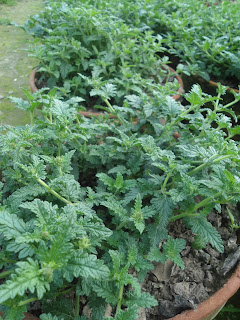
Verbina


Zinnia
Zinnia elegansHeight (Inches) 6-36
Spread (Inches) 6-36
Exposure Sun
Comments
Many colors, heat resistant, use dwarf variety such as Dreamlanyd.
The Zinnia is a versatile annual. They range in height from six to 36 inches and are available in many different colors and flowers. Zinnias grow well under hot, sunny conditions but need ample moisture to thrive. Creeping Zinnia is a reliable annual for hot, dry areas. The yellow flowers resemble small Zinnias. Plants have a spreading habit of growth and are useful annual groundcovers.
others


Amaranthus cadautus


Some Details courtesy Our Gardens fb group.


