
Extra Fancy Production of Dahlia (Indian)
Muhammad Imran
Khan
MSc. (Hons.) Horticulture
Dahlia


Dahlias are a
tuberous perennial, sometimes an epiphyte, native to mountains from Mexico to Colombia
Dahlia is a high
value ornamental crop grown in several parts of Washington State Washington Washington State
Dahlia Trial
Garden is located in Tacoma , WA US
and Europe, New Zealand , Australia and Japan
Dahlias are used as food
plants by the larvae of some Lepidoptera species including Angle Shades, Common Swift, Ghost Moth and Large Yellow Underwing.
The dahlia is named after Swedish 18th-century botanist Anders Dahl.
In German the dahlia was known during most of
the 19th century as Georgia , being named after the naturalistJohann Gottlieb Georgi of St. Petersburg, Russia.
Kingdom: Plantae
Order: Asterales
Family: Asteraceae
Subfamily: Asteroideae
Tribe: Coreopsideae
Genus:Dahlia
Species30 species, 20,000 cultivars
Species30 species, 20,000 cultivars
- D. apiculata
- D. atropurpurea
- D. australis
- D. barkeriae
- D. brevis
- D. campanulata
- D. cardiophylla
- D. coccinea
- D. cuspidata
- D. dissecta
- D. excelsa
- D.
foeniculifolia
- D. hjertingii
- D. hybrid
cultivar
- D. imperialis
- D. linearis
- D. macdougallii
- D. merckii
- D. mollis
- D. neglecta
- D.
parvibracteata
- D. pinnata
- D. pteropoda
- D. rudis
- D. rupicola
- D. scapigera
- D. scapigeroides
- D. sherffii
- D. sorensenii
- D. spectabilis
- D. sublignosa
- D. tenuicaulis
- D. tenuis
- D. tubulata
- D. variabilis
Other names
The dahlia is also known as Tenjikubotan in Japanese, which literally means 'Peony of India'.
According to the Japanese language of flowers, it means 'good
taste'. In Hindi or Urdu , Dahlia flowers are also referred to as Belia.
History
Francisco Hernandez visited
Mexico in 1615 and noticed two spectacular varieties of dahlias, which he
mentioned in his account of medicinal plants of New Spain, not published until 1651.The French
botanist Nicolas-Joseph
Thiéry de Menonville, sent to Mexico to steal the cochineal insect valued
for its scarlet dye, noted the strangely beautiful flowers he had seen in his
official report, published in 1787. Seeds sent from the botanical garden of
Mexico City to
Madrid flowered for the first time in the botanical garden in October 1789, and
were named Dahlia coccinea by Antonio José Cavanilles,
the head of the Madrid Botanical Garden, in his Icones
plantarum, 1791. A few seeds were secured by Lord Bute and
sent to England
The introduction of the
dahlia to the florists of the Netherlands
was effected about the same time, when a box of dahlia roots was sent from Mexico to the Netherlands.
Only one plant survived the trip, but produced spectacular red flowers with
pointed petals. Nurserymen in Europe crossbred
from this plant, which was named Dahlia juarezii, with parents of dahlias discovered
earlier: these are the progenitors of all modern dahlia hybrids. The Jardin des plantes in
Paris received dahlias in 1802, again from Madrid.[A second species, D. variabilis, was at last
successfully grown in 1804 by the gardener at Holland House, Kensington, of Lady Holland, who sent the seeds from Madrid. An early
breeder of dahlias was comte Léon-Charles LeLieur de Ville-sur-Arce, intendant of the château de Saint-Cloud, its glasshouses and gardens,
who had four varieties to work with,and by 1806 had produced three
double-flowered dahlias.
Since 1813, commercial
plant breeders have been breeding dahlias to produce thousands of cultivars,
usually chosen for their stunning and brightly coloured waxy flowers. Dahlia
was named the national flower of Mexico in 1963. Dahlia plants range in height from as
low as 12 in (30 cm) to as tall as 6–8 ft (1.8–2.4 m). The flowers can be
as small as 2 in (5.1 cm) in diameter or up to 1 ft (30 cm)
("dinner plate"). The great variety results from dahlias being octoploids (they have eight sets of homologous chromosomes,
whereas most plants have only two).
Cultivation
Dahlias grow naturally in
climates which do not experience frost,
consequently they are not adapted to withstand sub-zero temperatures. However
their tuberous nature enables them to survive periods of dormancy, and this characteristic means that
gardeners in temperate climates with frosts can grow dahlias successfully,
provided the tubers are lifted from the ground and stored in cool yet
frost-free conditions during the winter. Planting the tubers quite deep (10 –
15 cm) also provides some protection. When in active growth, modern dahlia
hybrids perform most successfully in well-watered yet free-draining soils, in
situations receiving plenty of sunlight. Taller cultivars usually require some
form of staking as they grow, and all garden dahlias need deadheading
regularly, once flowering commences. Slugs and snails are serious pests in some parts of the
world, particularly in spring when new growth is emerging through the soil. Earwigs can also disfigure the blooms. The
other main pests likely to be encountered are aphids (usually on young stems and immature
flower buds), red spider mite(cause foliage mottling and
discolouration, worse in hot and dry conditions) and capsid bugs (result in contortion and holes at
growing tips). Diseases which may be found affecting dahlias include powdery mildew, grey mould (Botrytis cinerea), verticillium wilt, dahlia smut (Entyloma
calendulae f. dahliae), phytophthora and some plant viruses.
Dahlias, Dahlia variabilis, are a
popular addition to the landscape because they have a wide height range (1 to 6
ft) and a variety of flower shapes and sizes (2 to 12 inches). Color range includes
orange, pink, purple, red, scarlet, yellow, and white. Some flowers are striped
or tipped with a different color. Dahlias begin blooming in early summer and
continue to frost. Flower production may slow with high summer temperatures and
moisture stress. Dahlias can be started from dormant tuberous roots, grown from
seeds, rooted from cuttings, or purchased as transplants. Because dahlias are
hybrids, plants grown from seeds do not completely grow true to type. To ensure
cultivar consistency, buy tuberous roots of named cultivars and save the
tuberous roots from year to year.
Judged shows
Dahlias are often grown
for judged shows. Awards are given for best in class and best in show.
Traditionally, dahlias grown for shows have used intensive application of
pesticides and inorganic fertilizers. More recently, however, competitive
dahlia growers have used organic methods with equally good results
Types of
Dahlias
By the florist Dahlias are divided into several sections, viz., Show, Fancy, Pompon or Bouquet, Cactus or Decorative, and Single. The two former
run so closely the one into the other, and the distinction between them is so artificial, that they are now practically fused into one, though in catalogues
the varieties are still ranged under the heads of Show and Fancy.
THE SHOW DAHLIA
This section comprises all self-coloured and all shaded flowers, such as the Prince of Denmark, which has a maroon almost a black shading thrown over
a deep wine crimson ground ; and all flowers having petals of a pale ground colour, edged with pink, rose, mauve, purple, crimson, maroon, etc. ; J. T. West and Miss Cannell may be cited as typical varieties.
THE FANCY DAHLIA
This is simply the large rounded Show or Exhibition Dahlia in a later form of development. The reason why the two sections were divided is found in
the fact that the Fancy type was later, in point of time, in appearing, and for a number of years its varieties were inferior both in size and in outline to those of
the Show type. The first Fancy Dahlias appear to have originated with Count Lelieur of Paris
flowers, and from these, it is believed, the present race of Fancy Dahlias has descended. Of this we may be certain that the earliest forms of the Fancy
Dahlia came from the Continent.
Two or more colours are necessary to a Fancy Dahlia. There are striped and there are tipped varieties, but the latter are occasionally striped also.
In the case of the edged Show Dahlia, the colour on the petal edges is always darker than the ground ; in the Fancy Dahlia the reverse holds good. Thus, a
white, yellow, or any pale ground flower, edged or laced with a dark colour, after the manner of the Picotee, is simply an edged or laced Show Dahlia ; but when the disposition of these colours is reversed, when the petals of a dark or yellow ground flower are tipped with a light colour, as, for instance, Mrs. Saunders, which is yellow tipped with white ; of Peacock, which is crimson tipped with white, the variety is regarded as a Fancy Dahlia. When the ground colour is light, with a dark edging, as in the case of Miss Cannell, it is a Show Dahlia. Striped
flowers, no matter what the ground colour may be, are always Fancy Dahlias. All the best Fancy Dahlias produced within the last twenty years have been of
English origin. It is the custom at some small country flower-shows to admit all tipped and edged Dahlias as Fancy Dahlias ; but this is invariably permitted by judges who are imperfectly acquainted with the technical distinction between the two types.
THE POMPON OR BOUQUET DAHLIA
This type, of which we have so many beautiful varieties in the present day, is of German origin, and dates from about 1808, when Hartwig of Karlsruhe
obtained a double variety from the single scarlet Dahlia coccinea. The Germans favoured this small form, which obtained the name of Liliputian, on account of the small size of the flowers, and not because of its dwarf growth, for the first varieties obtained from it introduced to this country were of very tall habit. Hence the Pompon varieties have been known as German Dahlias. Our English florists,
especially of late years, have greatly improved this type in the newer varieties ; they are now of dwarf and compact growth, singularly free of bloom, admir-
ably adapted for adorning the flower garden, and invaluable for all decorative purposes.
THE CACTUS DAHLIA
This singularly novel type put in an appearance in England Utrecht , received a box of flowers from Mexico Alexandra Palace
of the meetings of the Eoyal Horticultural Society.
It was at once seen that there were possibilities of development in this interesting stranger. New forms soon began to appear, and at the present time there are many superb varieties of a number of shades and combinations of colour, but all exhibiting the shape of the original introduction, which obtained the name of
Cactus from its resemblance in colour to the vermilion of Cereus speciosissimus the Showy Cactus a designa- tion which was at once adopted and is now universally recognised. The habit of growth is undergoing con- siderable improvement, and many of the newer sorts are admirably adapted for garden decoration.
THE DECORATIVE DAHLIA
These may be regarded as intermediate forms of the Show Dahlia, brought into notice by the intro- duction of the Cactus type ; but few of them have any pretensions to the true Cactus character, and with the wonderful improvement seen in the latter, many will soon go out of cultivation. They certainly furthered the employment of the Dahlia as a decorative plant in our gardens, the freedom of bloom of some of the varieties being their chief recommendation. In America Decorative Dahlias are most popular at the present time.
THE SINGLE CACTUS DAHLIA
This is of comparatively recent development, but for all kinds of decorative work it has an important future before it. The first varieties were raised by the late Mr. E. J. Lowe, F.E.S., and passed into the hands of Messrs. Dobbieand Co., Kothesay, in the year 1891. Since then the type has been undergoing rapid improve- ment, and when better known its value will be widely recognised for every purpose for which cut flowers are required. A more graceful flower for dinner-table and other decorations, it is hardly possible to conceive than the Single Cactus Dahlia.
POMPON CACTUS DAHLIAS
A group of dwarf, free-blooming, small-flowered varieties is being produced, which promises to be valu- able for market and decorative purposes ; the large blooms of the exhibition varieties, often on weak stems, being found unsuitable for employment in such ways.
TOM THUMB DAHLIA
This is a miniature race of round-flowered Single Dahlias raised by the late Mr. T. W. Girdlestone, M.A., and introduced by Messrs. Cheal and Sons some years ago. They grow from twelve to eighteen inches high, and have proved of great value in the flower garden, forming dense bushes, and blooming with re- markable freedom.
QUILLED OR ANEMONE-FLOWERED DAHLIAS
During the past two years the Continental florists have sent to this country representatives of a race of dwarf-growing dahlias, having flowers with a circle or two of ray florets and the centre a cushion of quilled florets resembling a quilled aster or an anemone- flowered Pompon Chrysanthemum. They need some improvement if they are to become popular.
THE COLLARETTE DAHLIAS
This is a type of Single Dahlia having, issuing from the yellow disc, which is in the centre of the flower, a circle of small white or primrose-coloured short florets. Two varieties have been sent from the Continent, viz. President Viger, crimson with a white collar; and Joseph Gougon, reddish orange with a collar of orange florets. They are very free-blooming and produce their flowers on long stems thrown well above the foliage.
Planting
A typical dahlia tuber somewhat resembles a disfigured hand with "fingers"
Select
a sunny (minimum of 6 hours) locationprotected from strong winds. Dahlias grow
best in a deep,fertile, well-drained soil with a pH of 6.0 to 6.5; they arenot
tolerant of water-logged soils. Incorporate 2 to 4inches of organic matter such
as compost, pine bark, orwell-aged manure and 2 to 4 lb of 8-8-8 or 10-10-10
per100 ft2
(2 to 4 Tbsp per ft2) before planting.Dahlias are very
sensitive to freezing temperatures. Largetuberous roots may be planted about 2
weeks before thelast spring frost date. Small tuberous roots and
transplantsshould not be planted until all danger from frost haspassed. Spacing
between plants depends upon thecultivar and method of growing: rows, beds, or
borders.
Large-flowering
dahlias should be spaced 3 to 4 ft apart;smaller dahlias can be spaced 2 ft
apart.Dig a hole 8 to 10 inches deep and wide enough toaccommodate the tubers.
Loosen the soil in the bottom ofthe hole and refill to a depth of 6 inches. Set
the tuberousroot on its side, with the eyes facing upward. Cover with2 to 3
inches of soil. Soil should be filled in around theplants as they develop until
the surface is level. Manygardeners insert a stake at the side of each hole at
plantingfor future support.
Summer
Care
Apply
a 3- to 4-inch layer of mulch using either compost, pine straw, or pine bark.
Dahlias are heavy users of water; keep the soil moist but not saturated. Each
tuberous root usually produces multiple shoots. While you can leave all the
shoots to grow, thinning will produce flowers of higher quality. Leave one to
four of the strongest shoots. When plants are about a foot tall and display 3
to 4 pairs of leaves, pinch out the terminal shoot to encouragebranching. One
pinching is sufficient for most dahlias; small growing types can be given an
additional pinching. Tall-growing dahlias should be staked to support the long
stems and large flowers. Begin staking when the plants are about a foot in
height. Fertilize monthly with a water soluble fertilizer or apply 2 to 3 lb of
5-10-10or 10-10-10 per 100 ft2 (2
to 3 Tbsp per ft2) in July. Excessive nitrogen can
result in foliage production at the expense of flower production. A second application
may be needed on sandy soil or during rainy seasons. Flower size can be
increased by removing lateral flower buds (referred to as disbudding). When the
three buds that form at the end of each branch reach the size of small
peas,
remove the two side buds. Small-flowering types should not be disbudded. Faded
flowers should be removed to encourage continuous blooming.
Check
plants on a regular basis for diseases, insects, and other pests. The most
likely pests are aphids, spider mites, leafhoppers, thrips, and European corn
borer. Disease problems include tuber rots, ring spot, vascular wilts, mosaic
virus, powdery mildew, and botrytis blight. Disease problems can be reduced by
following recommended cultural practices and by providing good air circulation.
Remove or treat affected plants or plant parts when first observed.
Tuber
Storage
Dahlias are hardy to USDA Zone 8
where they can be cut back and left in the ground to overwinter. In Zone 7b, dahlias
sometimes overwinter in the ground depending on
soil drainage and severity of the winter. It is recommended the tuberous roots be lifted and stored during
the winter. After a killing frost, cut the foliage back 2 to 4 inches above the
ground. Lift each clump separately with a spading fork. To avoid spearing
tuberous roots, begin digging a foot away from the center of the plant. Gently
brush soil off the clump of tuberous roots. Spread the clumps in a well-ventilated,
shaded area to cure for a few days. Do not leave the tubers in full sun. Dust
injured portions with sulfur to inhibit diseases. Pack each clump upside down in
a ventilated box or basket using slightly damp vermiculite, perlite, or peat
moss to cover the clumps. During the winter, the tuberous roots should be
stored between 35 and 50°F and should not be exposed to hot or cold drafts or
damp or very dry conditions. If the tuberous roots begin to shrivel during the
winter, sprinkle lightly with water.
Growing Medium
In selecting a growing medium, physical and chemical properties of the soil are important. A very important physical property of the growing media ‘porosity’ influences gas exchange and water availability. Good porosity helps in water management and increases the flexibility needed to control moisture levels while extending the schedule of fertilizer applications and it helps in proper root development and plant growth.
Fertilizer application
Blooming dahlias are heavy feeders and should be given fertilizers with a high percentage of potassium and phosphorous such as 5-10-10, 10-20-20 or 0-20-20.
The fertilization of dahlias during production is extremely important to maximize growth. An understanding of complete nutrient management is essential if fertilizer problems are to be avoided.
Water soluble fertilizer: Although this is an excellent fertilization method, it is very important that adequate water be applied so that a sufficient amount of water drains or drips through the medium at each watering. A buildup of fertilizer salts will occur in the medium when watering is not thorough. In many instances the total fertilizer content (soluble salts) of the medium will become so high that plant growth will be severely checked.
The recommendation for constant feed fertilizing of Dahlia is generally 200 to 250 ppm of nitrogen. Experience suggests nutrient problems are minimized when a constant fertilizer program is used. Use a constant feed when using soilless mix, liquid fertilizer can be applied at weekly intervals. When this approach is used, the rate of application is generally in the range of 450 to 500 ppm of N.
pH
The pH scale indicates acid and basic values in the growing medium. The pH level of 7 is neutral that is a midpoint in the scale from 0-14. The values below this point (7) are acidic and those above are basic in nature. Dahlias are influenced by the growing medium's pH. It is believed that many hybrid Dahlias will not flower well at a pH below 5.5, and that leaves will develop brown spots. At a pH below 5.8, Dahlia are susceptible to iron and manganese toxicity. The optimum pH range for Dahlia is 5.8 to 6.2.
In selecting a growing medium, physical and chemical properties of the soil are important. A very important physical property of the growing media ‘porosity’ influences gas exchange and water availability. Good porosity helps in water management and increases the flexibility needed to control moisture levels while extending the schedule of fertilizer applications and it helps in proper root development and plant growth.
Fertilizer application
Blooming dahlias are heavy feeders and should be given fertilizers with a high percentage of potassium and phosphorous such as 5-10-10, 10-20-20 or 0-20-20.
The fertilization of dahlias during production is extremely important to maximize growth. An understanding of complete nutrient management is essential if fertilizer problems are to be avoided.
Water soluble fertilizer: Although this is an excellent fertilization method, it is very important that adequate water be applied so that a sufficient amount of water drains or drips through the medium at each watering. A buildup of fertilizer salts will occur in the medium when watering is not thorough. In many instances the total fertilizer content (soluble salts) of the medium will become so high that plant growth will be severely checked.
The recommendation for constant feed fertilizing of Dahlia is generally 200 to 250 ppm of nitrogen. Experience suggests nutrient problems are minimized when a constant fertilizer program is used. Use a constant feed when using soilless mix, liquid fertilizer can be applied at weekly intervals. When this approach is used, the rate of application is generally in the range of 450 to 500 ppm of N.
pH
The pH scale indicates acid and basic values in the growing medium. The pH level of 7 is neutral that is a midpoint in the scale from 0-14. The values below this point (7) are acidic and those above are basic in nature. Dahlias are influenced by the growing medium's pH. It is believed that many hybrid Dahlias will not flower well at a pH below 5.5, and that leaves will develop brown spots. At a pH below 5.8, Dahlia are susceptible to iron and manganese toxicity. The optimum pH range for Dahlia is 5.8 to 6.2.
Temperature
Temperature effects the growth and development of Dahlia by influencing the rate of photosynthesis and respiration, processes of floral initiation and development, the length of time to maturity, final plant quality, and ultimate post production life. There is considerable variation in the response of Dahlia cultivars to low and high temperatures. While some cultivars may exhibit heat or low temperature stress, other cultivars grown under the same conditions in the same greenhouse may show no signs of stress.
Irrigation
Watering greenhouse floriculture crops remains the most difficult task to perfect. Many factors such as type of crop, pot size, temperature, soil mix, bench design, and type of heat can affect watering practices.
The decision relating to when to water is still an "art" rather than a "science". Criteria such as touching or looking at the medium and foliage color (shiny - no need to water; dull - need to water) have been used for years. Unfortunately, most floriculture crops are watered when they give the symptoms of wilting. When the leaves of a plant wilt, the plant has already undergone a water stress which results in a decrease of the growth rate. This is especially true with Dahlia which are slow to wilt, even when the plants are under a water stress. Subjecting Dahlia to water stress is sometimes used as a growth regulator. However, it is not generally recommended to regulate Dahlia growth in this way. Additionally, allowing a soilless mix to dry out makes it difficult to perform properly unless a wetting agent is added to the medium or irrigation water. Every time a medium is irrigated it is strongly recommended that a sufficient amount of water be applied to avoid water stress, allow adequate moisture for plant growth, and allow for some leaching to occur.
Diseases
DAHLIAS
are available in the following forms:-
Experiment for Making Dahlia Extra Fancy
Planting date
Potting Media
Fertilization
Foliar spray of
growth regulators
Temperature
Dahlia
Plant dahlias in a sunny position with moist, humus-rich, well-drained soil and ensure good ventilation to reduce the risk of mildew. Remove spent flowers promptly to encourage continuous blooming. Only if soil does not freeze or become waterlogged can tubers be left in the ground for winter. Propagate by division or from cuttings.
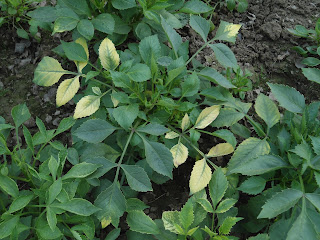


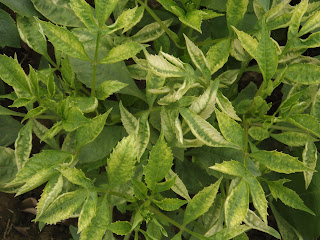


Temperature effects the growth and development of Dahlia by influencing the rate of photosynthesis and respiration, processes of floral initiation and development, the length of time to maturity, final plant quality, and ultimate post production life. There is considerable variation in the response of Dahlia cultivars to low and high temperatures. While some cultivars may exhibit heat or low temperature stress, other cultivars grown under the same conditions in the same greenhouse may show no signs of stress.
Irrigation
Watering greenhouse floriculture crops remains the most difficult task to perfect. Many factors such as type of crop, pot size, temperature, soil mix, bench design, and type of heat can affect watering practices.
The decision relating to when to water is still an "art" rather than a "science". Criteria such as touching or looking at the medium and foliage color (shiny - no need to water; dull - need to water) have been used for years. Unfortunately, most floriculture crops are watered when they give the symptoms of wilting. When the leaves of a plant wilt, the plant has already undergone a water stress which results in a decrease of the growth rate. This is especially true with Dahlia which are slow to wilt, even when the plants are under a water stress. Subjecting Dahlia to water stress is sometimes used as a growth regulator. However, it is not generally recommended to regulate Dahlia growth in this way. Additionally, allowing a soilless mix to dry out makes it difficult to perform properly unless a wetting agent is added to the medium or irrigation water. Every time a medium is irrigated it is strongly recommended that a sufficient amount of water be applied to avoid water stress, allow adequate moisture for plant growth, and allow for some leaching to occur.
Diseases
Bacterial diseases
- Bacterial
wilt: Pseudomonas solanacearum
- Crown gall: Agrobacterium tumefaciens
Fungal diseases
- Flower blight Botrytis cinerea
- Leaf spot Alternaria alternata
·
Powdery mildew Erysiphe cichoracearum
Erysiphe communis
Erysiphe polygoni
Erysiphe communis
Erysiphe polygoni
·
Southern blight Sclerotium rolfsii
Athelia rolfsii
Athelia rolfsii
- Smut Entyloma dahliae
·
Stem and tuber rot Rhizoctonia solani
Thanatephorus cucumeris
Thanatephorus cucumeris
- Cottony stem rot Sclerotinia sclerotiorum
·
Vascular wilt Fusarium oxysporum
Verticillium albo-atrum
Verticillium albo-atrum
DAHLIAS
are available in the following forms:-
MINI PLANTS - These are rooted
Dahlia Cuttings available from April to mid May they require growing on under
glass (min 10C) prior to planting out.
POT GROWN PLANTS - Grown in the pots for customers with no facilities for growing
on, i.e. ready for planting out.
TUBERS - Small compact Dahlia
Tubers - ideal material for propagating purposes.
Different Techniques used for making plant extra fancy
The extra fancy production
techniques are those techniques used to enhance the quality and life of the
plants or plant parts e.g. flowers, leaves and stems, and to produce different
colors, shapes and sizes.
Through
extra fancy production techniques different flowers and vegetables are made
fancier than gained through simple cultivation techniques. Followings are the
techniques which are used to make the plant extra fancy:
·
Change in genetics by crossing techniques to
bring desire character in plant.
·
Different Potting Medias for proper growth
and root system.
·
Fertilizer application (Foliar application of
different Nutrition).
·
Foliar spray of hormones increase the size of
specific part of the plants
·
Biotechnology: to produce new varieties with
extra fancy characters.
Experiment for Making Dahlia Extra Fancy
Planting date
Rooted Dahlia Cuttings were planted in 8’’ pots to raise the
nursery of Dahlia on December 16, 2010. To provide heat these pots were placed
under polyethylene sheet.
Transplantation date
Plants were transplanted on January 27, 2011.
Dahlia plants were transplanted in
14” clay pot. These pots were also covered with polyethylene sheet to provide
heat for their proper functioning.
Potting Media
These pots were filled with one part
compost, one part coconut coir and one part silt to make porous media. So that
the gases and water movement enhances and to provide maximum space for root
growth. Dahlia thrives well in porous and well-drained media enriched with
organic matter.
Stacking
Plants
were supported with sticks to hold in proper shape and tied with strings of cotton,
the stacking helps stems to withstand wind and storm.
Fertilization
Fertilizer application: DAP (16:46:0)
Fertilizer application date: 5 Feb.,
2011.
After hoeing DAP was applied @ 20 g
per pot to give sufficient support to plant. Urea was applied when plant
attained 15 leaves stage. Application of Urea at that stage will enhance the
green color of leaves. It enhances flowering and helps to increase in flower
size.
Foliar spray of
growth regulators
Foliar
sprays of Gibberellin (GA3) @ 0.20 ml / L of water was applied each
week beginning when the plant attained 5 leaves stage until the week before
inflorescence. The application of GA3 promotes growth of shoots,
leaves and will trigger and enhance flowering. As a result early flowering was
gained and helped in increase in size of the flower.
Irrigation
Plants were watered frequently at alternate day.
Hoeing
Manual
periodic hoeing was done to control the weeds.
Temperature
Dahlia responds best in warm
temperature. For the production of Dahlia using the "Fast Cropping"
technique to make Dahlia extra fancy, night temperatures of 60 to 65 degrees F
and day temperatures of 70 to 75 degrees F are best for optimum plant growth.
This temperature range promotes the cell division in Dahlia which will lead to
proper growth.
Diseases and insects/pests control
Diseases and insects/pests were
controlled by doing following practices:
- Used
disease-free plants.
- Practiced
good sanitation by pulling weeds and removing plant debris.
- Used
soil amendments to produce a well-drained soil.
- Used
disease-free plants.
- Avoided
overhead irrigation and water early in the day, no later than 11 a.m.
- Allowed
air circulation.
- Removed
diseased plants and plant parts.
- Removed
old flowers and senescing leaves.
- Used
a well-drained soil or potting medium.
- Maintained
proper nutrient levels (increased nitrogen and iron have been reported to
reduce incidence of Oedema).
- Chemical
control: fungicides.
Conclusion
The Dahlia plants will thrive well
by using these techniques. Fancy production techniques are used to make plant
more beautiful, to enhance the specific character of plant or plant parts. By
using extra fancy techniques we can increase the flower size, flower color,
flower number, leaf beauty, shape of the plant, increase produce, increase
disease and insects/pests resistance of the plant etc. Plants will be healthier
and beautiful than plants grown in normal conditions.
References
1.
Genus Dahlia Taxonomy.
UniProt. Retrieved 2009-10-15.
2.
Dahlia Cav. Germplasm Resources
Information Network. United States Department
of Agriculture. 1996-09-17. Retrieved 2009-10-15.
3.
Hernandez, Rerum
medicarum Novae Hispaniae thesaurus(Rome, 1651); details of the
introduction of the dahlia to European gardens are taken from John W.
Harshberger, "The Native Dahlias of Mexico", Science, New Series, 6 No. 155 (December 17, 1897:908-910).
4.
Harvey,
Marian (1987). Mexican Crafts and
Craftspeople. Associated University Presses. p. 19. ISBN 9780879825126.
6.
American
Dahlia Society web site: http://www.dahlia.org.
Dahlia
Plant dahlias in a sunny position with moist, humus-rich, well-drained soil and ensure good ventilation to reduce the risk of mildew. Remove spent flowers promptly to encourage continuous blooming. Only if soil does not freeze or become waterlogged can tubers be left in the ground for winter. Propagate by division or from cuttings.


